Brilliance Belongs to the One Who Shows It — Elena Ferrante's Neapolitan Novels
The New York Times named it the best book of the 21st century. I spent half a year with Elena Ferrante's Neapolitan Novels — on why Lila and Lenù called each other 'brilliant,' and on a life that keeps its jewel hidden versus one that dares to bring it out. A reading record bidding farewell to a 4,000-page journey.
Was it late last year? I first came across it through that overwhelming accolade: 'The New York Times' best book of the 21st century.' Of course, when I started I had no idea it was a tetralogy, nor how thick those four volumes would turn out to be. A novel I would never have begun had I known its length — nearly 2,500 pages in all — and it took me almost half a year to finish. It began with 'When will this end?' and by the final stretch, I couldn't bear to say goodbye.

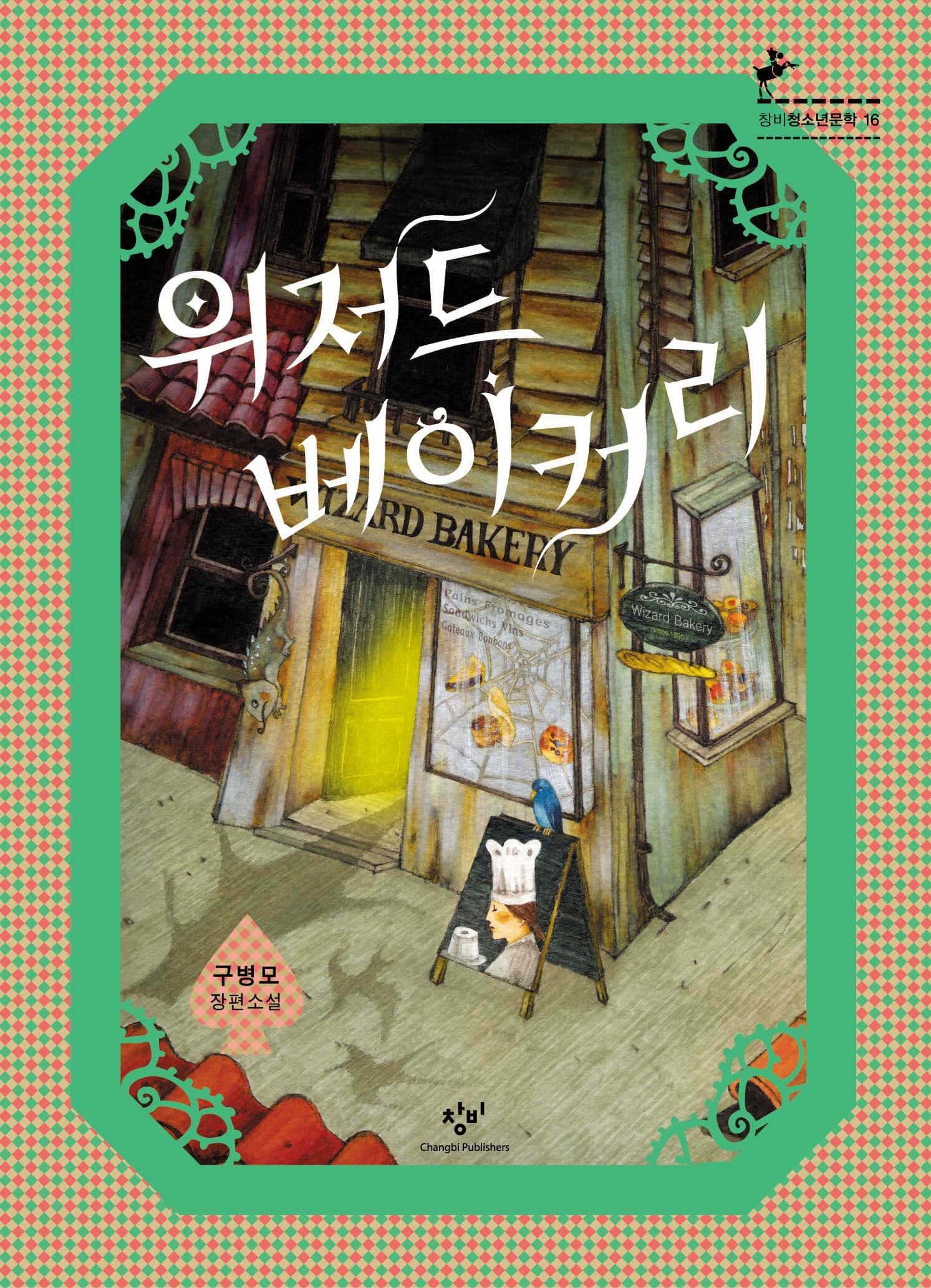
The Neapolitan Novels. The covers are lovely.
Like Visiting Old Friends
Personally, I rarely pick up novels this long. When a book is slim, the power of each sentence lands; when it's long, you're carried by the current of the story — and I tend to prefer books that strike that balance. I'm also the type who doesn't mix books: I'd rather read one through to the end, fully immersed in its world and its story.
Even so, this book felt like meeting old friends every now and then to catch up. The characters — Lenù, Lila, Enzo, Pasquale, the Solara brothers, Nino — all seemed to be alive somewhere, telling me their stories little by little. Unfamiliar names, and yet I feel I could sketch their faces from memory. Even after I set the series down for a long while after the first volume, My Brilliant Friend, the characters were still living right there in the pages when I picked it back up. Perhaps because of that vividness, HBO made a series of the same name. Curious, I watched the trailer — the story, the characters, even the setting looked as if the prose had been converted straight into physical space.


Seeing with my own eyes what I had imagined while reading — a good thing, and a bad thing.
Each Other's Brilliant Friend
Set in Naples in the second half of the twentieth century, a city changing by the day, the book runs its long course steadily, centered on the relationship between two friends, Lenù and Lila, as they grow up. From the dolls the two girls first exchanged in childhood, through the years when marriage carried them into separate lives, to the days after all the children had gone — it is all written down calmly, and honestly. In Lenù's voice.
In this book, it is Lila who says to Lenù: you are 'my brilliant friend.' And that word, brilliant, feels like the way the two friends look at each other. What was Lenù to Lila, and Lila to Lenù? The book confides the words of all those years — sometimes happily, sometimes very painfully, but always honestly.
The One Who Left and the One Who Stayed
Lenù, the narrator, feels an endless inferiority toward Lila, who from childhood was better at everything. Always self-assured, gifted at writing, and loved by so many men. Even Nino, whom Lenù had loved for so long, fell in love with Lila first. Her own successful book bloomed from the nourishment of a childhood spent with Lila, and in the life that followed — even in raising children — Lila wore everything as naturally as clothes she had always owned. How could Lenù not be gripped by the feeling that no matter how hard she tried, she could never reach Lila's talent?
But there is a difference between Lila and Lenù. Lila never left Naples; Lenù, who never stopped feeling her own lack, kept leaving. She published books under her own name and brought her story out into the world. And it was Lenù, not Lila, who bore the child of the man she loved. She believed all her life that she had no born talent — but thanks to that, Lenù could see herself as she was, see her insufficient self exactly as it was, and put it out into the world.
Lila is different. In everyone's eyes, Lila is more beautiful than anything — beyond mere appearance, call it the aura a single person can carry. To anyone who saw her, Lila's talent was overwhelming. Whatever she touched became beautiful, became extraordinary. Able to shape anything she cared for exactly as she willed, Lila was unique.
And yet, in the end, Lila never stepped outside her own frame. She had chances to break it boldly, but she gave her whole life to Naples — the world she knew best — and never truly left it. The moments Lila did step outside were always the result of someone else's choices. Taking a new job, building the shoe factory — Lila's own choices stayed within her world. To such a Lila, was Lenù 'a courageous friend who stepped out into the world despite her lack,' or 'a lacking friend who showed herself without knowing her lack'?
What Does It Mean to Be Brilliant?
I choose to believe that in the moment she said 'my brilliant friend,' at least, Lila was showing her true heart. What is truly brilliant? Is it holding a jewel — however beautiful, however rare — only inside yourself, never bringing it into the light? Or is it showing a jewel you consider rather ordinary just as it is, and putting it out there first? Every creator's dilemma is probably much the same: a jewel never brought out cannot even be appraised. After all, even Lila's life — turbulence itself, by anyone's measure — could only come into the world through Lenù.
What's more, not one character in this book lives by their own choices alone. The poor quarters of late-twentieth-century Naples reach beyond that time and that place, all the way to where we live now. We insist that we must decide and choose our own lives, but in truth we are tangled in webs we cannot begin to see, and we trip over stones we never noticed. To call every life in this book purely the result of its owner's choices would be the same mistake as flattening our complicated lives into something simple.
Lenù's gaze toward all those characters living their rugged lives is warm. Even toward the vicious Solara brothers, her gaze was never one-dimensional. Nothing can be reduced to a single property. And I take a certain comfort in that: you don't have to carry all the weight alone, as if everything were the result of your own choosing.
The Alleys of Naples
No one knows who Elena Ferrante really is, they say. But having finished these books, I felt certain: this writer must have been born in Naples and lived alongside it all her life. An unconcealable love for her hometown seeps from every sentence. The alleys of Naples felt alive and breathing.
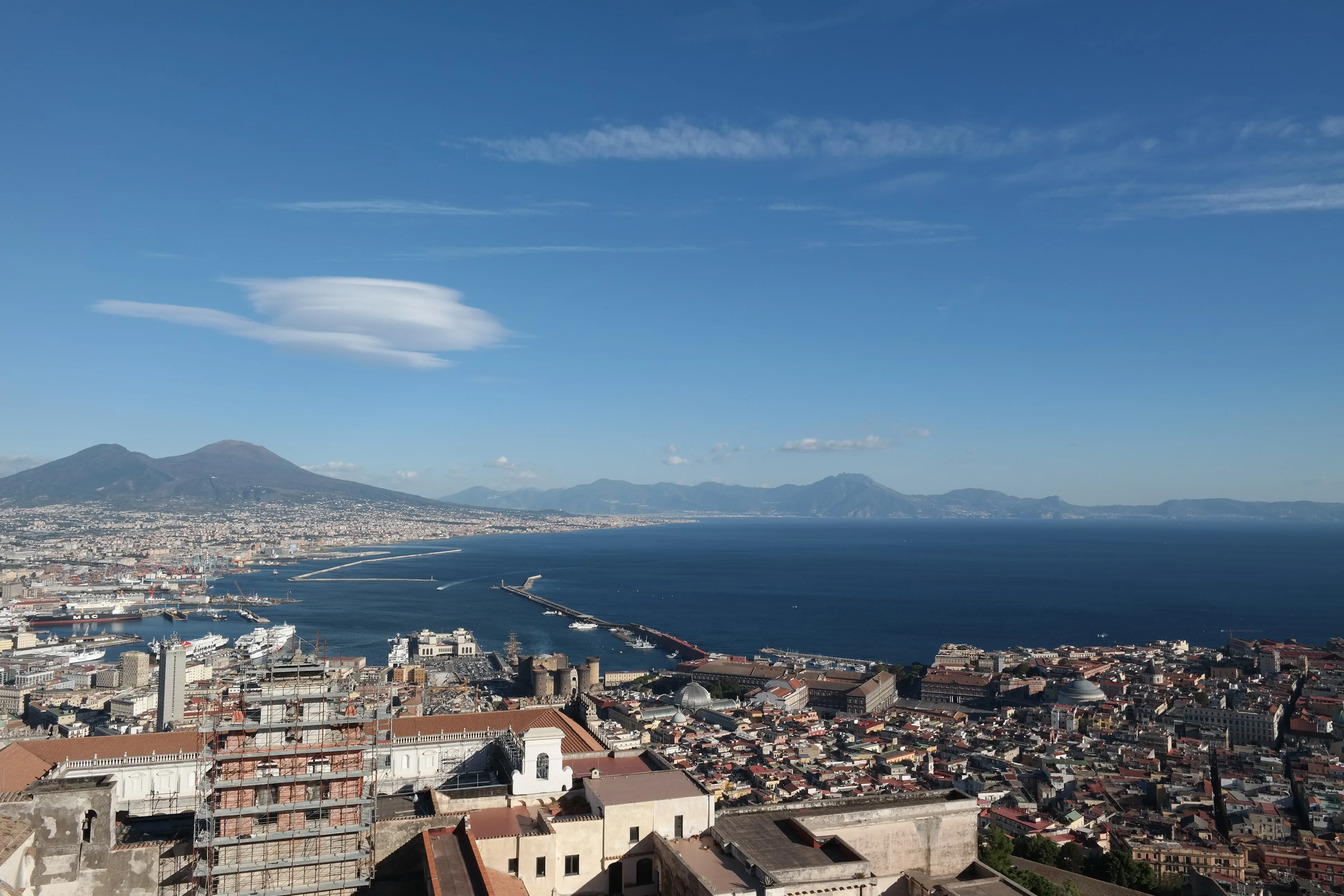
I think back on the streets of Naples I encountered while traveling. The alleys and piazzas that appeared now and then in the book's backdrop come to mind. The views with Vesuvius in the distance; the cityscape, run-down compared to northern Italy, yet romantic along the sea. Had I read this book before going, I would have walked those streets feeling so much more. How limited we are — able to see only as far as we know.


The characters must have walked these streets too. Piazza del Plebiscito, with Mount Vesuvius in the distance.
Without hesitation, I believe Elena Ferrante's tetralogy will become a modern classic of the twenty-first century. Its astonishing insight into people living through the turbulence of modern history, and the love breathing beneath that insight, will keep these characters drawn on readers' hearts for a long, long time.
I'm sharing a YES24 affiliate link for this book.
Purchases made through this link earn me a small commission, which helps me create better content.